The Center for People & Environ (CPE) is a research-based, non-profit organization headquartered in Dhaka, Bangladesh. CPE serves as a hub where scientists, researchers, professionals, academics, students, and communities work together on the environmental and development challenges facing Bangladesh and South Asia. Its approach is to connect science, people, and policy: rigorous research generates evidence, communities help shape and own the solutions, and the findings are carried into policy and practice at local, national, and regional levels.

CPE combines field research with its own facilities: a climate adaptation experiment and training park (CAMET Park), soil, water and environment, social research, and GIS & data science laboratories, and community-facing platforms such as People’s Media and Climate Theatre. This lets CPE work across the full chain from baseline and diagnostic studies to piloting, monitoring and evaluation, capacity building and policy advocacy, with particular attention to the people most exposed to climate and environmental risk: coastal, char, haor and urban-poor communities, women, persons with disabilities, children, and displaced populations.

Vision, Mission and Core Values

VISION

A climate-resilient, just and sustainable Bangladesh and South Asia, where people and ecosystems thrive together, and decisions are guided by sound science.

MISSION

To generate rigorous, interdisciplinary research and turn it into community-led solutions, stronger local capacity and evidence-based policy that reduce climate and environmental risks, conserve nature and advance inclusive, low-carbon development for the most vulnerable people.

Core Values

  • Scientific integrity — independent, rigorous and ethical research, peer-reviewed through our Independent Scientist Board and our Good Practice in Research policy.
  • Locally led and people-centred — communities take part as partners in diagnosing risks and designing solutions, not as subjects of study.
  • Inclusion and equity — gender equality, disability inclusion and the voices of marginalized and displaced groups are built into every stage of our work.
  • Accountability and transparency — sound financial management, annual external audit, safeguarding and an open grievance redress mechanism.
  • Collaboration — partnerships with universities, government, NGOs, donors and the private sector to move evidence into action.
  • Innovation — nature-based solutions, data science, GIS and new risk-financing tools applied to practical development problems.

Strategic Objectives

CPE’s objectives follow directly from its programmes and track record. Each objective below lists the main activities through which CPE delivers it, examples from recent work, and the Sustainable Development Goals (SDGs) it contributes to.

Objective

Key activities

Examples from CPE’s portfolio

SDGs

1. Generate credible evidence for climate and development action

Baseline, midline and endline studies; impact and final evaluations; climate vulnerability and capacity analysis (CVCA); feasibility, scoping and market studies; results-based M&E.

Baseline for the BDRCS Coastal DRR Programme; endline evaluation of Panii Jibon-III (Helvetas); evaluation of PCRCB-II (CCDB); RISE baseline (LEDARS).

SDG 13, 17

2. Strengthen climate resilience and disaster risk management of vulnerable communities and cities

Community risk assessment and risk reduction action plans; city risk profiles; anticipatory action and early warning; local adaptation plans; climate risk insurance and risk-financing tools; heat adaptation.

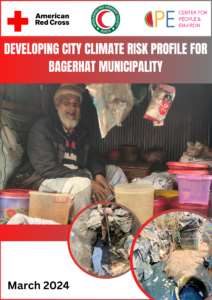
PROAACT anticipatory action (LEDARS, ongoing); DRM plans for Dhaka, Rajshahi and Sylhet (German Red Cross); city risk profiles of Bagerhat and Satkhira (American Red Cross); coastal climate risk management instruments (Ocean Risk Innovation Challenge, Canada).

SDG 1, 11, 13

3. Promote climate-resilient livelihoods, agriculture and food security

Climate-smart villages and agriculture; saline-tolerant crops and forage; value chain and labour market assessments; decision support systems; post-harvest loss management; safe food supply (Deshojo Bazar, Subarna Krishi).

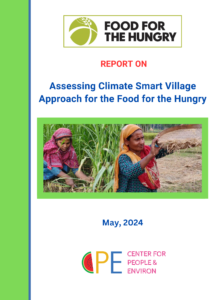
Saline-tolerant forage in the south-west coast (Krishi Gobeshona Foundation); Climate Smart Village development (Food for the Hungry); food security and crop production gap analysis (BRAC); climate-smart value chains for youth (iDE).

SDG 1, 2, 8

4. Conserve ecosystems and advance nature-based, low-carbon and circular solutions

Nature-based solutions; mangrove restoration and carbon credits; methane and carbon footprint analysis; biodiversity monitoring; integrated water resource management; plastic waste recycling and environmental management frameworks.

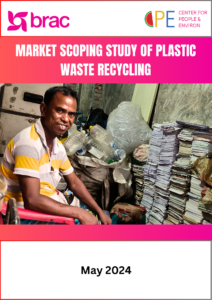
Mangrove restoration for carbon credits (DT Master Carbon); NbS for adaptation (Adaptation Research Alliance); methane source-point detection (Patrick J. McGovern Foundation); eDNA biodiversity (University of Zurich); plastic value chain and EIA (BRAC).

SDG 6, 7, 12, 14, 15

5. Advance inclusion, gender equality and climate justice

Disability-inclusive and gender-responsive DRR and climate strategies; SRHR in a changing climate; climate displacement and social cohesion; child labour and climate migration; locally led adaptation; trade and climate justice.

SRHR of women with disabilities (B-SCAN); gender-inclusive shelter access (MJF); DIDRR situation analysis in Khulna (CBM); Rohingya–host community social cohesion (SHED, CARE).

SDG 5, 10, 16

6. Build capacity and integrate science into policy

Training modules and courses; policy briefs and reviews; national policy dialogues; South Asian conferences; the International Journal of Climate Science and Policy; community communication through People’s Media and Climate Theatre.

Climate risk insurance training module (Oxfam); policy brief on cyclone anticipatory-action triggers (United Purpose); youth capacity building on methane (Social Change Nest, UK); CATA-Earth planetary health education (EU).

SDG 4, 13, 16, 17

7. Use data science, GIS and technology for better decisions

Remote sensing and GIS mapping; big data management; drone surveys; climate and weather modelling; digital decision-support tools.

Urban ecosystem services mapping in Rajshahi (ICLEI South Asia); agricultural resilience decision support system (Bangladesh Academy of Sciences); risk mapping for DRM plans.

SDG 9, 11, 13

Alignment with Global and National Frameworks

CPE’s objectives support the 2030 Agenda and SDGs, the Paris Agreement, the Sendai Framework for Disaster Risk Reduction, the Principles for Locally Led Adaptation, the Kunming-Montreal Global Biodiversity Framework, and Bangladesh’s National Adaptation Plan (2023–2050), Bangladesh Delta Plan 2100 and Standing Orders on Disaster.

Our Global Network

volunteer
0 k+
sponsors
0 +
Scientists
0 +
Researchers
0
awards
0 +
Centre for People & Environ (CPE) Since 2019, CPE has delivered more than 60 research, evaluation and implementation assignments for international humanitarian organizations, development agencies, universities, foundations and government-linked research bodies. These include the Red Cross and Red Crescent Movement (IFRC and the American, British, Danish and German Red Cross societies), the European Union, CARE, Plan International, Oxfam, BRAC, Helvetas, the Danish Refugee Council, CBM, the Adaptation Research Alliance, the University of Zurich and the IGZ-Leibniz Institute.

8

years

of Excellence

Ongoing Projects

Implementation of the Promoting Anticipatory Actions to Address Climate and Environmental Risks for Community Transformation (PROAACT) Project

Implementation of the Promoting Anticipatory Actions to Address Climate and Environmental Risks for Community Transformation (PROAACT) Project

Objective of the assignmentThe overall goal of the assignment is to provide technical and research support for the effective implementation of the PROAACT Project through the development of a Local Adaptation Plan of Action (LAPA) for the unions of Shyamnagar Upazila. The specific objectives of the assignment are to: ·…
Facilitating climate risk management instruments for coastal climate vulnerable people in Bangladesh

Facilitating climate risk management instruments for coastal climate vulnerable people in Bangladesh

Facilitating climate risk management instruments for coastal climate vulnerable people in Bangladesh. The project aims to develop climate-resilient fishermen communities to reduce loss and damage induced by ocean risk along the coastal belt of Bangladesh through Restoration and conservation of coastal nature-based infrastructures, Introduction of risk recovery insurance for the…
Resilient Roots: Leveraging Indigenous Practices for Salinity Adaptation in Southern Bangladesh

Resilient Roots: Leveraging Indigenous Practices for Salinity Adaptation in Southern Bangladesh

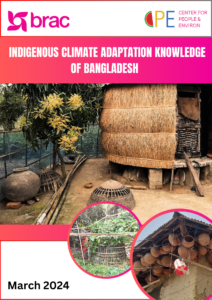
Resilient Roots: Leveraging Indigenous Practices for Salinity Adaptation in Southern Bangladesh  The initiative's objectives are a) Screening out the indigenous knowledge, tools, practices, crop types, and varieties that are effective in agricultural adaptation against increased salinity in Southern Bangladesh. b) Assessing the socio-economic-ecological-cultural and resilience feasibility of the screened Indigenous…
develop planetary health resilience planning

develop planetary health resilience planning

Develop Planetary Health Resilience Planning The purpose of the proposed “CATA-Earth” project – Catalysing Transformative Change in Planetary Health Education – is to build capacity for designing and delivering innovative community-driven planetary health education in climate-vulnerable regions in Bangladesh and Indonesia. CATA-Earth will enable transformation in how planetary health is…
The Pre-feasibility study on mangrove restoration, conservation, and carbon footprint analysis project

The Pre-feasibility study on mangrove restoration, conservation, and carbon footprint analysis project

The Pre-feasibility study on mangrove restoration, conservation, and carbon footprint analysis project The pre-feasibility study will be anchored through the Mangrove Habitat Suitability model. The model will analyze Topographic Parameters, Environmental Parameters, Water Parameters, Soil Parameters, Bioclimatic parameters, Socio-economic Parameters, and Disturbance Parameters. Along with the above-mentioned seven parameters, the…

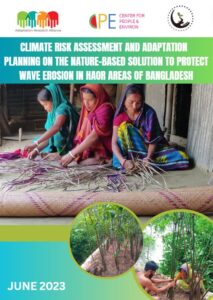
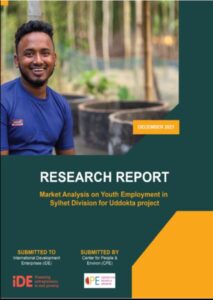
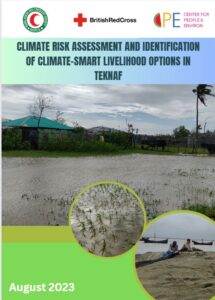
Project Reports

*For report access please feel free to Contact us.